'The End of Manhattan,' exhibits the work of Jay Fine
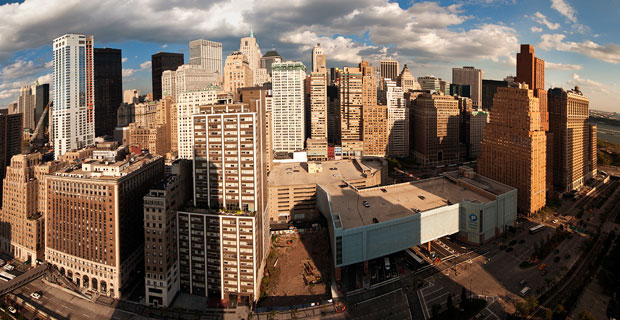
Jay Fine, BatteryParkCity.com’s favorite and often featured photographer, is showcasing his Fine photography in an exhibit entitled, “The End of Manhattan.”
With Lower Manhattan as his muse, Jay Fine will be exhibiting his work which includes his iconic shot of the Statue of Liberty struck by lightning, an image that had received critical praise in media outlets internationally.
Along with Antonio Petracca’s “10″, Fine’s “The End of Manhattan” opens at the Kim Foster Gallery on September 8th from 6pm-8pm. Both exhibits will be displayed through October 15th.
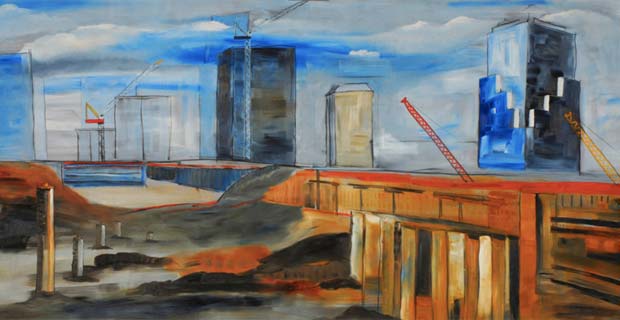
Antonio Petracca’s new exhibition “10″ is a journey that started with 9/11. Petracca a Battery Park City resident, who was displaced and living in a hotel, felt compelled to begin a new series of paintings that responded to the tragedy of 9/11. The mission of Petracca’s exhibit is to depict the destruction, the sense of great loss and, more importantly, the can-do spirit of rebuilding and renewal that most New Yorkers felt at the time.
On the flip side, Jay Fine’s exhibit “The End of Manhattan” might have a dire name, but is more meditative view on the photographer’s life in Battery Park City than a 9/11 commemoration. Included in the show is 60×40 inch version of the aforementioned Statue of Liberty and Lightning photo, which was more recently featured in the August 2011 National Geographic Magazine.
According to Fine, “The exhibits compliment each other and should generate, we hope, a lot of interest, not just from the people who liver here but from folks around the world. Some of the greatest responses to my work are from France, Italy and South East Asia based on the feedback from my Facebook page and Flickr site.”
The exhibit itself is pegged to be a Downtown family affair, Â with the framing of the prints done by Battery Park City residents and owners of the World Trade Art Gallery, Jane and Doug Smith. The large scale prints were made by Joseph Ng, whose wife works in the Financial District.
The Kim Foster Gallery is located at 529 W 20th Street, New York.
For more information please check the gallery’s website: www.kimfostergallery.com/
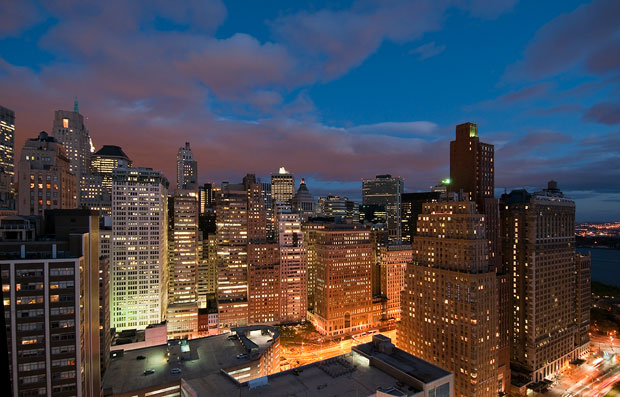
9/10/10 Downtown 7:47 PM Thursday (Credit: Jay Fine)

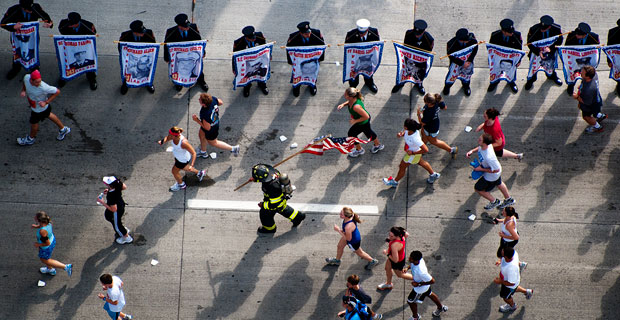
Tunnel to Towers by Jay Fine


07Sep / 2010
Battery Park City in 1982: Better Than Whole Wheat!
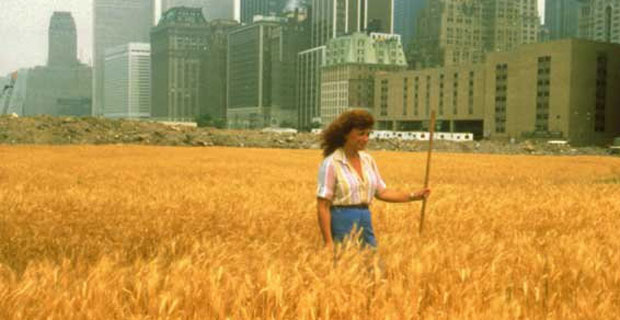
Agnes Denes Fields of Wheat Installation in 1982 (Credit: TwitPic-TruthSeerum via Claudia
BatteryParkCity.com receives many contributions/tips on our site for ideas and current events — and we love it!
Recently we got a true gem of nostalgia. Our Twitter pal TruthSeerum, sent us this picture of Agnes Denes harvesting fields of wheat in 1982.
As we’re preparing for the commemoration of the World Trade Center terror attacks, we’ve made a call out for great memories of our neighborhood before 9/11 and our hopes for the neighborhood in the future. We thought we’d give you the first taste of contributions we’ve received.
If you have a great memory like this, or a personal story about 9/11 please feel free to send it to us at contribute@batteryparkcity.com.
Now back to the history of his photo:
According to Agnes Dene’s website:
Wheatfield — A Confrontation
2 Acres of wheat planted & harvested, Battery Park landfill, downtown Manhattan summer 1982 (with Statue of Liberty across the Hudson)
After months of preparations, in May 1982, a 2-acre wheat field was planted on a landfill in lower Manhattan, two blocks from Wall Street and the World Trade Center, facing the Statue of Liberty. Two hundred truckloads of dirt were brought in and 285 furrows were dug by hand cleared of rocks and garbage. The seeds were down by hand and the furrows covered with soil. The field was maintained for four months, cleared of wheat smut, weeded, fertilized and sprayed against mildew fungus, and an irrigation system set up. The crop was harvested on August 16 and yielded over 1000 pounds of healthy, golden wheat.
Planting and harvesting a field of wheat on land worth $4.5 billion created a powerful paradox. Wheatfield was a symbol, a universal concept, it represented food, energy, commerce, world trade, economics. It referred to mismanagement, waste, world hunger and ecological concerns. It called attention to our misplaced priorities. The harvested grain traveled to twenty-eight cities around the world in an exhibition called “The International Art Show for the End of World Hungerâ€, organized by the Minnesota Museum of Art (1987-90). The seeds were eventually carried away by people who planted them in many parts of the globe.
Pretty cool huh?
Posted by Lizbeth in Arts, News
Tags: 1982, agnes denes, battery park city, fields of wheat, reader comments
Permalink